

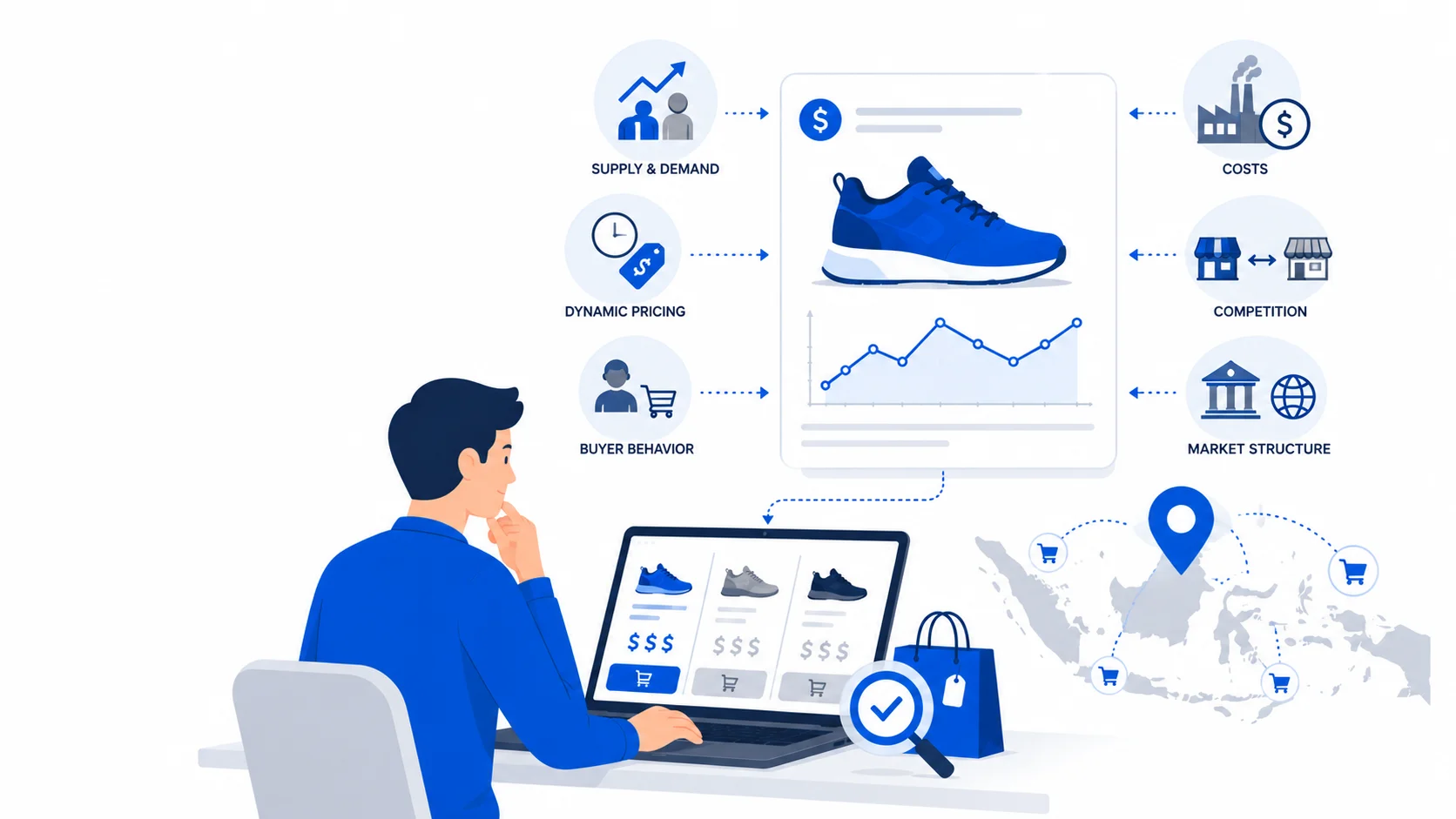
Product prices change over time mainly because of shifting supply and demand, the seller's changing costs, competition in the market, and pricing strategies that adjust in real time. When more people want something than there is stock available, prices tend to climb. When sellers flood the market or demand cools off, prices drift down. Understanding these forces helps you see that a price tag is not a fixed truth, but a moving number shaped by a handful of predictable factors.
Most of us notice this from an early age. You watch someone buy the same item at different prices depending on when and where they shop, and you start to wonder what is really going on behind those numbers. The good news is that price movement follows patterns you can learn to read.
Supply and Demand: The Core Engine Behind Price Changes
Supply and demand is the foundation of why product prices change over time. Demand refers to buying activity, and supply refers to selling activity. When demand is higher than supply, prices tend to rise. When supply is higher than demand, prices tend to fall.
Think about it this way. When a lot of people want or need a particular item, many of them are willing to pay more just to secure it. Sellers notice that eagerness and raise their prices accordingly. The stronger the demand relative to available stock, the higher the price usually goes.
The opposite happens when there are more sellers than buyers. If many people are trying to sell the same asset or product, they start setting more competitive prices to attract the limited number of interested buyers. Low demand plus plentiful supply almost always pushes prices down.
This is not limited to everyday goods like groceries. The same dynamic shows up in gold, stocks, crypto, property, and other investment instruments. Anywhere buyers and sellers meet, the balance between them keeps prices in constant motion.
Dynamic Pricing: When Prices Adjust in Real Time
Dynamic pricing is a strategy where the price of a product or service changes based on factors such as time, demand, available stock, or the buyer's profile. It lets businesses stay competitive and adjust prices to match current market conditions rather than sticking to one static number.
This approach became popular in online retail around 2015, and its use has grown significantly since then. It was once mostly available to large sellers because it was expensive to run. Today, more affordable tools and services have made dynamic pricing accessible to nearly any type of business, which is why so many sellers now rely on it.
Dynamic pricing works by adapting prices in real time based on the factors that influence a market. That flexibility gives businesses a chance to maximize revenue while offering a more personalized experience to different customers.
Common Types of Dynamic Pricing
It is worth remembering that dynamic pricing carries an ethical side too. Changing prices too often or too aggressively can frustrate customers and damage a brand's reputation. Buyers care about whether a price feels fair, and their sense of fairness comes from comparing a seller's price against what others are charging.
How Buyer Behavior Shapes These Adjustments
Not every shopper reacts to price the same way. Some buyers are what analysts call "myopic," meaning they simply buy once the price drops below what they are willing to pay. Others are "strategic," adjusting their timing and behavior based on the pricing patterns they expect a seller to follow.
A customer's knowledge level plays a big role here. The more informed someone is, the more deliberately they respond to price changes. That is exactly why price awareness has become such a valuable skill for modern shoppers.
Elasticity: Why Some Prices Move More Easily Than Others
Price elasticity measures how much the quantity of a product changes in response to a change in its price. On the supply side, elasticity of supply tells you how much production adjusts when the price shifts. As prices rise, sellers are generally motivated to produce more, though this does not hold true for every type of good.
Elasticity also explains why certain products react strongly to price changes while others barely move. For a product with high elasticity, raising the price tends to cut sales sharply because buyers are quick to walk away or find alternatives. For a product with low elasticity, a price increase has little effect on how much gets sold, because buyers still need or want it regardless.
This concept matters beyond individual sellers. It helps businesses predict how the market will react to price adjustments and guides decisions about how much to produce. It even helps governments shape economic policy, manage price stability for essential goods, and understand how import and export rules might play out.
Costs, Competition, and Market Structure
Product prices change over time because the seller's underlying costs and competitive pressures keep shifting. Every price sits somewhere between the value a customer perceives and the costs a supplier must cover, so when either side moves, the price moves too.
Businesses build their prices on top of two kinds of costs. Understanding these helps explain why a product might suddenly become more expensive.
When variable costs like raw materials or shipping go up, sellers often pass those increases on to buyers. A simple and popular method for this is cost plus pricing, where the selling price is the total cost per unit plus a markup. As costs change, so does the final price.
Market structure adds another layer. When a market is dominated by one company or leans toward monopoly, the lack of competition tends to push prices higher, which can discourage buyers and slow the flow of goods. Taxes and tariffs also play a part. When a country raises tariffs or other taxes, people often spend less, and that reduced spending can drag product values down.
Positioning matters as well. A low price is not always a winning move, since it can send a confusing signal about a product's quality or place in the market. Setting a price that lines up with customer expectations is usually more effective than simply going as cheap as possible.
Shopping Smarter When Prices Keep Moving
Because product prices change over time across sellers and marketplaces, the same item can cost noticeably different amounts depending on where and when you buy it. Today's shoppers are more careful than ever, comparing the value and price of one brand against another, largely thanks to how quickly information spreads through digital channels.
That habit of comparison is smart, but doing it manually is exhausting. Opening a dozen browser tabs, checking each marketplace, and trying to remember which listing was cheapest is a recipe for confusion, especially when prices can shift by the hour under dynamic pricing.
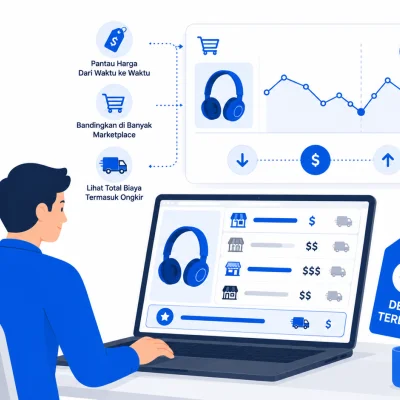
This is where a tool like Carikno becomes genuinely useful. Carikno helps you compare product prices across Indonesian marketplaces in one place, so you do not have to jump between apps and tabs to figure out where the best deal is.
What makes this especially handy is that price alone can be misleading. A listing that looks cheap might come with high shipping fees that quietly erase your savings. Carikno addresses this by showing the real total cost, combining the product price with shipping costs whenever that information is available, so you can judge offers based on what you will actually pay.
In short, when prices are constantly moving, having a clear view of the true bottom line across sellers helps you make a confident choice instead of guessing.
Bringing It All Together
Understanding how product prices change over time comes down to recognizing a few interacting forces. Supply and demand set the baseline, dynamic pricing adjusts numbers in real time, elasticity determines how sensitive a product is to those changes, and costs, competition, and market structure shape the range a price can live in.
Once you see prices as the result of these moving parts rather than random numbers, you stop feeling at the mercy of the market. You can time purchases better, recognize a genuinely good deal, and avoid overpaying when demand or dynamic pricing pushes tags upward.
And when you are ready to act, comparing the real total cost across marketplaces with a tool like Carikno turns all that understanding into a practical advantage. Prices will always move, but with a little knowledge and the right view of the numbers, you get to move a step ahead of them.


Leave a Comment