

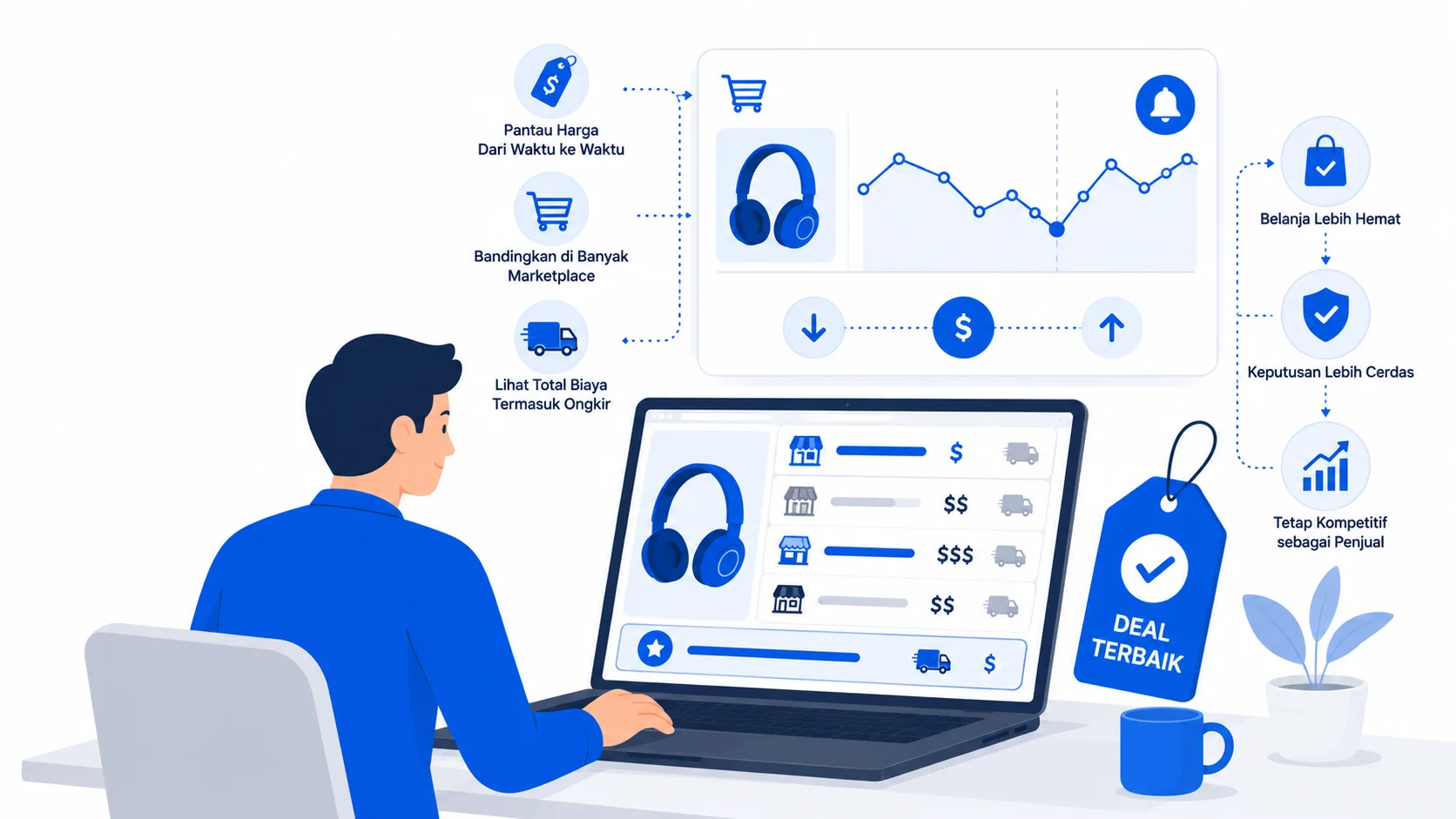
Price tracking is the practice of monitoring how a product's price changes over time across different sellers, so you can understand its real value instead of reacting to a single number you happen to see. It matters because online prices rarely stay still. They shift with flash sales, vouchers, campaign days, and stock pressure. If you only look at one snapshot, you learn almost nothing useful. Watching the pattern tells you whether a deal is genuinely good or just noise.
Whether you shop online or run a store, understanding price behavior helps you make decisions based on data rather than a gut feeling. Below, we will walk through what price tracking really involves, why it is trickier than most people assume, and how it connects to comparing prices across marketplaces.
What Price Tracking Actually Means
Price tracking is the ongoing process of recording and observing how the cost of a product moves over a period of time, rather than checking it once and calling it a day. A single glance at a listing tells you today's number, but it cannot tell you if that number is high, low, or completely normal for that item.
To understand this properly, it helps to remember what price is in the first place. Price is the amount of money a buyer gives in exchange for a product or service, and it reflects the value they expect to receive. Because that value is influenced by supply, demand, and competition, prices are constantly adjusting. Tracking simply captures that movement so it becomes visible.
The real question price tracking answers is not "how much is this right now?" but rather "how does this price usually behave?" That context is what turns a random number into something you can actually trust.
Price in Context, Not Just a Number
A price only becomes meaningful when you compare it to something. Is this seller always cheaper, or only during a campaign? Is the overall market price drifting down, or holding steady? These are the kinds of questions a one-time check can never answer, and they are exactly the questions tracking is built to solve.
Why Online Prices Are So Hard to Pin Down
Online prices are difficult to compare because they are dynamic, and the same product can carry very different costs depending on the seller, the promotion running that day, and even the shipping fee attached to it. This constant movement is the main reason manual price checking rarely works well.
Marketplaces are especially volatile. On platforms like Shopee, prices swing because of flash sales, vouchers, campaign periods, and stock levels. A store's own dashboard usually shows only that store's prices and sales, giving no view of how competitors set or change their prices. That gap in information is a real pain point for anyone trying to price competitively without starting a price war.
Sellers face several recurring challenges when they rely on eyeballing listings:
For shoppers, the difficulty shows up differently. There are so many places to check that the effort itself becomes tiring. Marketing researchers have even described a kind of "search fatigue" that sets in when comparing prices feels endless. With mobile shopping now something people do almost anywhere, the temptation to compare is constant, but so is the exhaustion.
How Price Comparison and Price Tracking Work Together
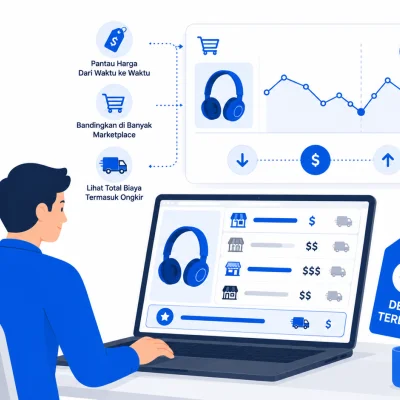
Price comparison is the act of evaluating the same product across different retailers based on total cost, value, and transparency, while price tracking follows how those costs move over time. Used together, they help you know both where to buy and when to buy.
Comparison tools generally follow a clear workflow. They gather prices from many retailers, match identical products so the comparison is fair, and then present the results in a single view. A good tool works almost like a search engine for prices: you type in a product and get a ranked list of where to buy it and what it will actually cost you.
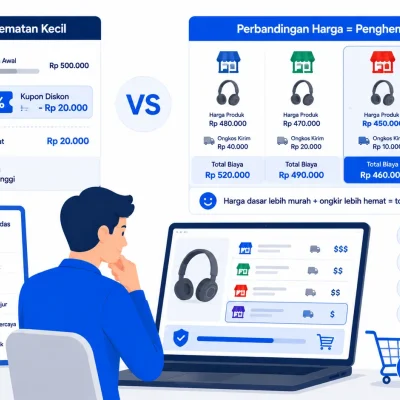
That phrase, actually cost you, is important. The listed price is not the full story. Shipping fees can change which offer is truly the cheapest, and a lower product price with a high delivery charge can end up more expensive than a slightly pricier listing with free shipping. This is why the strongest comparison approaches add extra components like shipping into the calculation rather than stopping at the sticker price.
The Real Total Cost Matters More Than the Sticker Price
When you compare offers, focus on the complete amount you will pay at checkout, not just the number shown on the product image. Two listings can advertise the same price yet cost very different amounts once delivery is included. Judging offers on total cost is the only way to know which one genuinely saves you money.
This is where a tool like Carikno fits naturally into the process. Carikno helps you compare product prices across Indonesian marketplaces, and when shipping information is available, it factors that into the picture so you see the real total cost rather than a misleading headline number. Instead of opening a dozen tabs and doing the math yourself, you get a clearer view of which offer actually wins.
Why You Should Be Using Price Tracking
You should use price tracking because it replaces guesswork with evidence, helping you avoid overpaying as a shopper and avoid mispricing as a seller. In a market where the best deal is always just a tap away, understanding price behavior is one of the few real advantages you can build.
For buyers, the payoff is straightforward. Tracking helps you recognize a genuinely low price when you see one, so you are not fooled by a "discount" that is really just the normal price dressed up. It also saves the mental effort of endless manual checking, which reduces that search fatigue and makes shopping feel manageable again.
For sellers, the benefits run deeper. Because a store's own backend was designed for managing that store and not for analyzing the wider market, external tracking fills a critical blind spot. Understanding how competitors price over time lets you stay competitive without racing to the bottom. It also connects directly to smarter pricing strategy.
Better Pricing Decisions
Pricing strategy is the method a business uses to decide how much customers should pay. Set a price too low and profit shrinks. Set it too high and buyers walk away. One common approach, competition-based pricing, looks directly at what rivals charge and positions your price around the market rate, sometimes lower to win volume and sometimes higher to signal a more premium feel. None of that works without reliable data on what competitors are actually doing, which is exactly what price tracking provides.
Here is a simple way to think about who benefits and how:
Shoppers spot true bargains, avoid inflated "sale" prices, and save time.
Small sellers gain market visibility they cannot get from their own dashboard alone.
Growing businesses back their pricing strategy with real evidence instead of assumptions.
Getting Started Without Overcomplicating It
Getting started with price tracking is simpler than it sounds, and you do not need to monitor everything at once. Begin with the products that matter most to you, whether that is a purchase you are planning or the items that drive your store's revenue.
As a shopper, focus your attention on a short list of things you genuinely intend to buy, then watch how their prices move before committing. As a seller, prioritize the products where pricing decisions have the biggest impact on your margin. In both cases, the goal is the same: replace one-off glances with a habit of watching the pattern.
When you are ready to compare offers across different Indonesian marketplaces, letting a tool such as Carikno do the heavy lifting removes the tedium of manual checking. It pulls comparable options together and accounts for shipping where possible, so you can judge the real total cost quickly instead of juggling calculations across tabs.
To sum up, price tracking is about seeing prices the way they truly behave, over time and in context, rather than trusting a single number. It protects shoppers from overpaying, gives sellers the market awareness their own tools lack, and supports smarter pricing decisions for everyone involved. Once you start paying attention to price behavior instead of price snapshots, it is hard to go back to guessing.
Leave a Comment