


If you want the short answer to why price comparison is often more economical than hunting for coupons, here it is: a coupon only shaves a small amount off one seller's price, while comparing prices lets you find the seller whose starting price is already lower, sometimes by a much bigger margin. A coupon might save you the equivalent of a dollar or two per trip, but choosing the right store from the start can cut a larger chunk from your total. Smart shopping is not about grabbing the flashiest discount, it is about paying the lowest real cost for what you actually need.
This matters because everyday spending on groceries and household basics is one of the largest lines in most family budgets. When that spending is not managed well, it quietly balloons and disrupts your financial stability. Understanding the difference between chasing a discount and comparing the underlying price is one of the simplest ways to protect your wallet.
Why Price Comparison Saves More Than Coupon Hunting
Price comparison saves more money because it targets the base price of a product, which is the biggest number in any purchase, while coupons only adjust that number slightly after the fact. Surveys cited in shopping research suggest that regular coupon users often save only around one to two dollars per shopping trip. That is a real saving, but it is modest compared to what you can find by simply buying from the seller who priced the item lower in the first place.
Coupons are also psychological tools. Research on discount vouchers describes how they trigger a small dopamine hit and a satisfying sense of winning. That feeling is genuine, but it can push people toward buying things they did not plan to buy, or toward a store that feels like a bargain while charging more overall. A coupon that saves you a little on an overpriced item is not really a saving.
Comparing prices removes that emotional trap. Instead of reacting to a promotion, you look at what several sellers actually charge and pick the cheapest legitimate option. This is the core idea behind smart shopping: getting the best value for every unit of money you spend, without sacrificing the quality or the needs that matter most.
Coupons Still Have Their Place
None of this means coupons are useless. Discounts and promo codes remain a great way to trim costs, especially when they stack on top of an already competitive price. Loyalty programs, cashback offers, and member-only discounts can add up over time. The point is sequencing: find the seller with the lowest base price first, then apply a coupon if one is available. That way the discount is a bonus, not a distraction that hides a worse deal.
The Hidden Cost of Shopping: Shipping and the Real Total
The real cost of an online purchase is the product price plus shipping, not the sticker price alone, and this is exactly where coupon hunting tends to mislead people. A store can advertise a lower item price and then quietly recover the difference through higher delivery fees. When you only compare the listed price or only look at a coupon, you can end up paying more once the order is complete.
Marketplaces in Indonesia such as Shopee, Tokopedia, Lazada, TikTok Shop, and Blibli each handle pricing, promotions, and shipping differently. Factors like free shipping offers, cashback, seasonal events, and stock levels all move the true price around. Two sellers listing the same product at a similar price can end up costing very different amounts after delivery is added.
This is why the total cost view matters so much. A cheaper product with expensive shipping can be a worse deal than a slightly pricier product with free delivery. Genuine price comparison accounts for both numbers together, which is something a single coupon can never do on its own.
Where a Tool Like Carikno Fits In
Manually checking every marketplace for the same item, opening tab after tab and jotting down prices, is exhausting and easy to get wrong. This is where a price comparison service like Carikno becomes handy. It lets you compare product prices across Indonesian marketplaces in one place, and when the data is available, it factors in shipping so you see the real total cost rather than just the headline price.
The value is not only convenience. By surfacing the genuine best offer without you juggling a dozen listings, a tool like this turns price comparison from a tedious chore into something you can actually do before every purchase. That habit, repeated across many orders, saves far more than clipping the occasional coupon.
How to Compare Prices Like a Smart Shopper
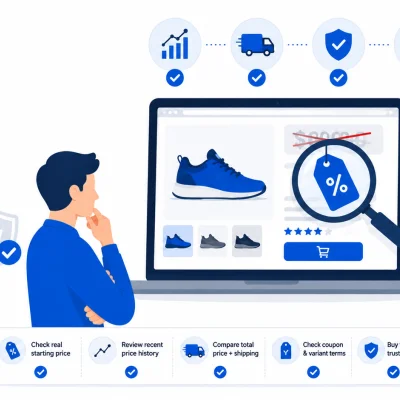
Comparing prices effectively means checking several sellers for the same item, including delivery costs, before you commit to buying. The habit is simple, but it consistently beats grabbing the first listing you see or buying from a store just because it handed you a coupon. Being a smart buyer means resisting the urge to grab whatever appears cheapest at a glance.
Here is a practical sequence you can follow for most purchases:
- Plan before you shop. Make a list of what you actually need and set a spending limit. This keeps you focused and blocks impulse buys that no coupon can justify.
- Check your stock at home first. Reviewing what you already have prevents double buying and wasted money, which is a bigger saving than most discounts.
- Compare several sellers. Look at the same product across multiple stores or marketplaces instead of trusting one price.
- Add shipping to the equation. Always evaluate the product price and delivery together so you know the real total.
- Apply coupons and cashback last. Once you have found the lowest base cost, stack any available discount on top for extra savings.
- Consider alternatives and bundles. Store brands or bundle packages can offer similar quality at a lower price, and buying certain staples in larger quantities can lower the cost per unit.
Timing also plays a role. Some sellers and marketplaces run promotions during specific events like Harbolnas, Ramadan sales, or payday sales. Lining up bigger purchases with these moments, while still comparing prices, can multiply your savings.
Building Habits That Protect Your Budget
The most reliable way to keep spending under control is to build shopping habits that make price comparison automatic, rather than depending on the mood of the moment or the pull of a discount. Smart shopping is fundamentally about efficiency and effectiveness in how you manage your money, and that starts with a few simple routines you repeat every time you buy.
Begin with a clear distinction between needs and wants. Before adding anything to a cart, ask what it is for and how often you will really use it. If you cannot give a solid answer, that is usually a sign of wanting to own something rather than needing it, and waiting a little often clears the impulse. Paying with cash or a debit card within a set budget, instead of leaning on credit, also keeps totals honest.
Then make comparison a fixed step. Just as you would not sign a contract without reading it, you should not buy a product without checking what a few other sellers charge for it, delivery included. Over months, this single habit does more for your budget than any coupon streak because it applies to every purchase, not just the ones lucky enough to have a code.
Why This Beats Coupon Chasing Over Time
Coupon hunting is reactive. You wait for a promotion, you feel the thrill, and you save a little on whatever the coupon happens to cover. Price comparison is proactive. You control the decision, you see the true cost, and you buy from the seller who genuinely offers the best deal. One depends on luck and marketing calendars, the other depends on a habit you own.
That is the deeper reason price comparison is more economical than searching for coupons. It attacks the largest cost, the base price, on every purchase, it accounts for hidden fees like shipping, and it does not rely on a store choosing to hand you a discount. Coupons are a nice extra when they show up. A steady comparison habit, supported by a tool like Carikno that gathers marketplace prices and shipping into one view, is what actually keeps your money working for you.
So the next time you feel tempted to hunt down a coupon, pause and compare first. Find the seller whose real total is lowest, then let any coupon sweeten the deal. That order of operations is the quiet secret behind why price comparison saves more money than chasing coupons, and it is a habit any everyday shopper can start today.



Leave a Comment