

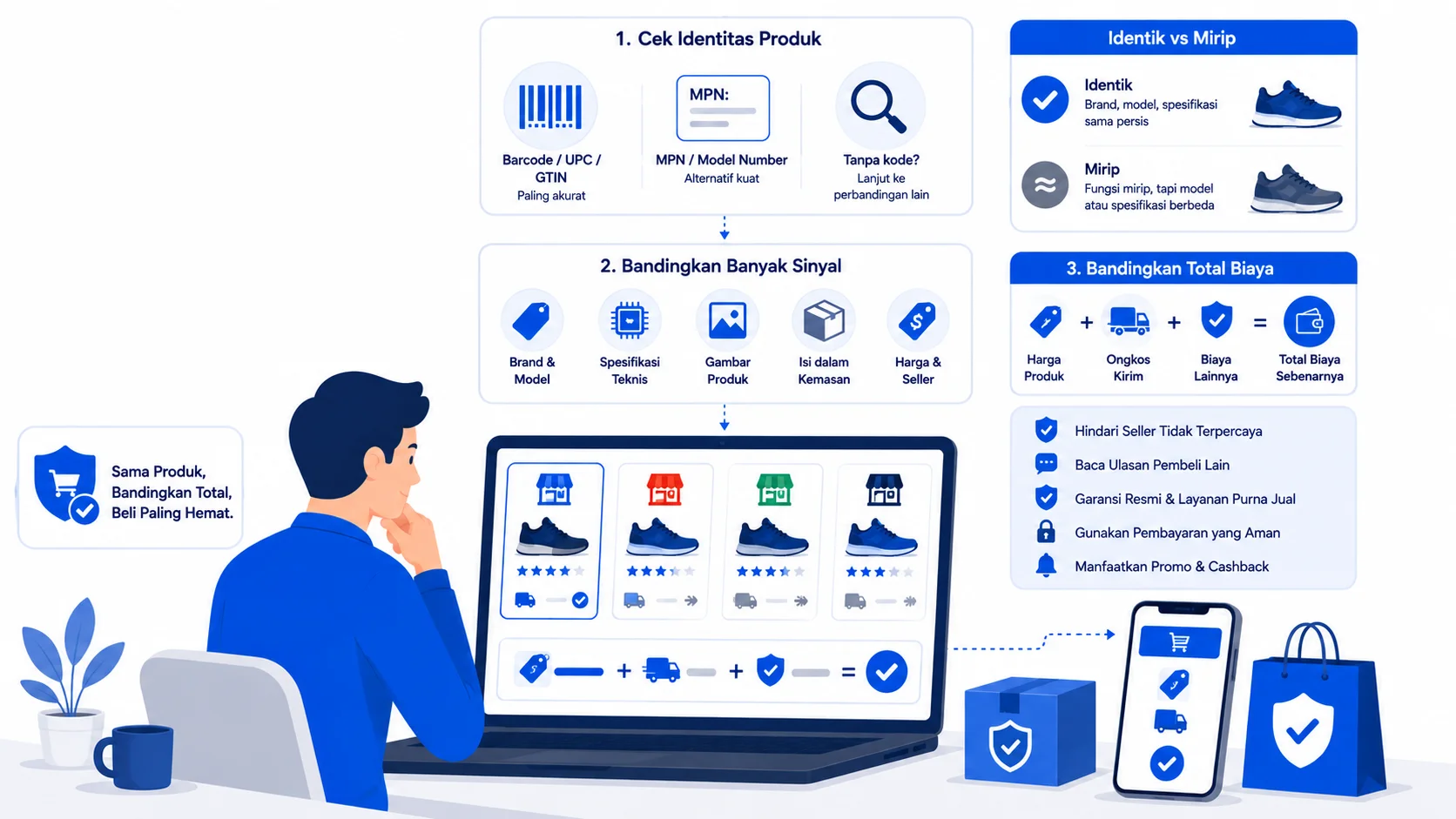
To know whether two listings are actually the same product, the most reliable signal is a shared barcode or standardized product identifier such as a UPC, GTIN, or MPN. When those codes match, the items are almost certainly the same physical product, even if the titles read completely differently. When codes are missing, you compare brand, model number, specifications, images, and included contents to decide whether you are looking at one item or two similar ones.
This matters more than people expect. The same product can appear under a dozen different names depending on the seller, and a listing that looks identical might actually be a bundle, a previous-generation model, or a rebranded version of the exact same thing. Below, we break down how to tell the difference so you can compare prices with confidence.
Why the Same Product Looks So Different Across Listings
The same product often looks different across online stores because there is no universal standard for how sellers write titles, descriptions, and specs. One marketplace might call an item "Nike Air Max 2023, Men's, Size 10, Blue," while another lists the very same shoe as "2023 Air Max Running Shoe by Nike, Blue, US 10." Different words, identical shoe.
This is the core reason product matching exists. Product matching is the process of figuring out when two or more listings refer to the same item, even when they are described in totally different ways. Think of it as detective work for product data.
A big driver behind the mess is what retailers call SKU chaos. A single product can end up with many listings, each with small tweaks in title, image, or description. Sellers do this to test keywords, appeal to regional preferences, or follow platform-specific rules. The result is a bloated pile of near-duplicates that makes comparison harder for shoppers.
The Most Reliable Signal: Barcodes and Standardized Identifiers
The most reliable way to confirm that two listings point to the same physical product is a matching barcode or normalized product identifier. Because the same product shares the same barcode, a matching UPC or GTIN is a strong, direct link between two listings that no amount of creative title-writing can hide.
These identifiers act like universal keys. When two datasets share one, you can connect the listings directly without guessing. The catch is that these keys are not always available. In many real scenarios, no shared code exists, so you are forced to rely on expert judgment and other clues to decide which items are pairs and which are distinct.
It also helps to know that codes are not interchangeable across every platform. Marketplace-specific identifiers do not always solve the problem, so a code that works neatly on one site may not carry over to another. This is exactly why matching remains one of the hardest and most repeated steps in any serious product data project. New listings keep appearing, and each one has to be checked again.
A quick checklist when a barcode is available
Compare the UPC, GTIN, or EAN across both listings.
If they match exactly, treat the items as the same product.
If the barcode is missing on one side, fall back to the MPN or model number.
If nothing lines up, move to specification and image comparison.
How to Confirm a Match Without a Barcode
When no shared barcode exists, you confirm a match by comparing multiple data points at once: brand, model number, specifications, prices, images, and included contents. Matching tools and human reviewers both analyze these signals together, because no single clue is enough on its own when identifiers are absent.
Here is the interesting part. On average, humans are still better than machines at identifying a product and comparing its price across websites. People notice context that automated systems miss, like a subtle difference in the accessories pictured or a size buried in a description. The trade-off is that manual comparison does not scale well and is hard to keep consistent when there are many listings to check.
Software fills that gap. Rules-based and probabilistic (fuzzy) matching techniques can perform reasonably effective matching even on imperfect data, and machine learning models push this further by handling larger, messier datasets. Some purpose-built tools compare candidate pairs of products and output a decision on whether each pair is the same item, which is useful for dynamic pricing, competitor analysis, and market research.
Identical versus similar products
It helps to separate two kinds of matches. Identical matching means the listings are exactly the same, same brand, model, and specs, often confirmed by a shared UPC or SKU. Similar or equivalent matching means the products are not identical but serve the same purpose. Knowing which one you are dealing with prevents you from treating a lookalike as a straight price comparison when it really is not.
How to Compare Prices Once You Confirm a Match
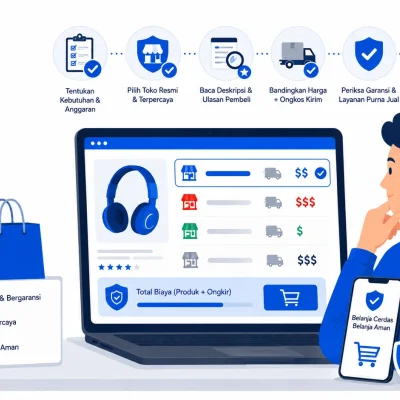
Once you are confident two listings are the same product, the goal shifts to finding the genuinely cheapest option, and that means looking at more than the sticker price. The real cost of an item is the product price plus shipping and any other fees, so the lowest number on the page is not always the lowest number you actually pay.
Confirming a match is what makes fair comparison possible in the first place. When you know two listings are the same item, you can confidently group them, surface the best deal across sellers, and avoid mixing up a bundle with a standalone unit. Shoppers often abandon a purchase when they cannot tell whether two listings are the same or when comparison becomes too tedious, so getting this right directly affects whether you feel good about buying.
Doing all of this by hand across many Indonesian marketplaces means juggling browser tabs, copying titles, and squinting at spec sheets. This is where a tool like Carikno becomes genuinely useful. Carikno compares product prices across Indonesian marketplaces and, when the data is available, factors in shipping so you see the real total cost rather than just the listed price. Instead of manually matching listings one by one, you get a clearer view of which offer is actually the best, which is exactly the comparison problem this whole guide is about.
A practical way to use price comparison after confirming a match:
Verify the listings are the same product using barcodes or the signal checklist above.
Note the base price on each marketplace.
Add shipping and any fees to get the true total cost.
Compare those totals, not the headline prices, before deciding where to buy.
Putting It All Together
Knowing whether two listings are actually the same product comes down to a simple order of priority. Start with the barcode or standardized identifier, because a matching UPC, GTIN, or MPN is the clearest proof you can get. When those codes are missing, compare brand, model, specifications, images, and contents together, and stay alert for bundles, rebrands, and older generations dressed up in fresh titles.
Get the match right first, then compare on real total cost including shipping rather than the price shown on the label. Tools like Carikno handle the tedious side of that comparison across Indonesian marketplaces, but the core skill of reading identifiers and specs is what keeps you from being fooled by two listings that only look alike. Once you can tell identical from merely similar, you shop with a lot more confidence.
Leave a Comment